The Business Opportunity You’re Already Sitting Inside
There is a moment that happens in almost every business interaction. The objective is reached. The question is answered. The meeting wraps up. And both parties leave thinking the job is done.
That moment, the quiet, unremarkable exit, is where most businesses haemorrhage value. Not loudly. Not obviously. But consistently, and at a cost that builds up over time.
This is not a problem of effort. Most business owners work hard. It is not a problem of capability. Most professionals are genuinely skilled. It is a problem of awareness, specifically the awareness to recognise that the interaction is not finished when the objective is complete.
Three Feet From the Gold
Napoleon Hill wrote about a miner who digs and digs, exhausted and convinced there is nothing there, until he finally quits. Someone else picks up the tools and strikes gold three feet from where he stopped. The story is usually told as a lesson in persistence. Yet persistence is only half of it.
The other half is awareness. The miner did not fail because he lacked effort. He failed because he stopped just before the value revealed itself, and he did not recognise how close he was. In business, that same pattern plays out daily. A referral gets passed without context. A client conversation stays on the surface. A salesperson solves the immediate problem and sends the invoice, never asking what comes next.
Nobody gets a notification saying they stopped too early. It shows up as the prospect that goes quiet, the client who does not return, or the referral partner relationship that never deepens. The opportunity simply disappears, and most of the time, the business owner never even knows it was there.
The Hidden Cost of Calling It Done
When people talk about business leakage, they tend to focus on obvious losses. A deal that fell through. A client who churned. A proposal that was ignored. But the more expensive category is the invisible one, such as opportunities that never materialised because someone ended the interaction at exactly the wrong moment.
Think about a referral partner you met at a networking event. The conversation was good, you both said it would be nice to catch up again, and then nothing happened. No conflict, no rejection, no dramatic failure. The relationship simply never became anything.
That is the real cost of stopping early. Not one large, visible loss. Instead, a thousand small opportunities that quietly evaporated because the depth of the interaction never matched its possibility. The conversation happened. The relationship was right there. But nobody stayed in it long enough.
More Leads Are Not the Answer
Here is where the conventional business growth advice goes wrong. When results plateau, the default prescription is to increase leads, marketing spend, activity, or push more volume into the front end of the machine.
But if the system is leaking value, more input simply means more opportunities to repeat the same mistake. More leads will not fix shallow conversations. More meetings will not fix weak conversion. More activity will not compensate for a business that has never learned to expand the opportunity it already has.
The fastest growth available to most businesses is not sitting in an untapped market. It is sitting inside existing relationships. People who already know you, like you, and trust you. You are already in conversations with them. The question is whether you recognise the opportunity before the interaction ends.
This is worth sitting with for a moment. Because if it is true, it changes the entire framing of what growth requires. It is not always about finding new rooms. Sometimes it is about becoming more valuable in the rooms you are already in.
The Plus One Principle
The idea is simple. Before you end any interaction, look for one more opportunity to create value. One more question. One more insight. One more relevant observation. One more introduction that would genuinely help the other person.
This is not a sales technique or pressure. If there is no real value to offer, then staying in the interaction longer is just noise. But most of the time, real value is sitting there waiting. A risk the client has not seen. A future problem they have not planned for. A connection that would genuinely help them. An insight that reframes their thinking.
The mechanism for finding it is summarised in four simple steps:
- Pause: Pause before mentally exiting. Be present in the moment.
- Listen: Actually listen, not to respond but to hear what is underneath the words. A client who says “we’re just busy at the moment” might be communicating overwhelm, broken systems, or a team under pressure. An initial reading moves on. A more attentive one hears the cue.
- Ask: Ask one more useful question. Not a clever question. A useful one. What is the next challenge coming for you? Where does this usually break down? What problem comes after this one?
- Act: Finally, take action on whatever you find. Make the introduction. Raise the risk. Share the resource. The insight is worthless until it is delivered.
Same Interaction, Different Outcome
An electrician replaces a light fitting and leaves. Or before leaving, they offer to check the switchboard, spot a compliance issue and identify a risk the client had no idea existed. The same visit, the same customer, becomes a very different conversation and a very different outcome.
The accountant who finishes the tax return and sends the invoice. Or the one who asks, before you go, have you sorted your succession plan? Your shareholder agreement? Your business insurance review? Not because they are selling something, but because they noticed a gap.
A lawyer. A mortgage broker. A web designer. An IT provider. Every professional service business has a version of this. The opportunity is almost always there. The variable is whether the person in the interaction is present enough to see it and deliberate enough to act.
McDonald’s built a billion-dollar increment on one question asked at the right moment: “Would you like fries with that?” Not revolutionary. Not complicated. Relevant, repeatable, and timed to expand the interaction just before it ended. That is the commercial case for Plus One distilled to its simplest form.
What This Actually Changes
The principle does not require a new strategy or a new system. It requires a habit, and specifically, a habit of asking one question before the interaction closes: What is my Plus One?
What is one more insight I could share? One more question I have not asked? One more way I might sincerely help this person before we finish up?
Most people, if they are honest, already sense the moment when they stop too early. There is often a trace of recognition, but there was more there. Another question that could have gone somewhere. A conversation that stayed on the surface when it did not have to. The principle does not invent a new skill. It gives you a trigger to act on the awareness you already have.
Business growth is rarely the result of dramatic reinvention. More often, it is the accumulation of interactions that were handled with slightly more intentionality than the average. Relationships that were given one more question before they were closed off. Conversations that went one layer deeper than they needed to.
The people who do this consistently do not necessarily work harder than everyone else. They stay in the interaction just a little longer. And in business, over time, that changes everything.
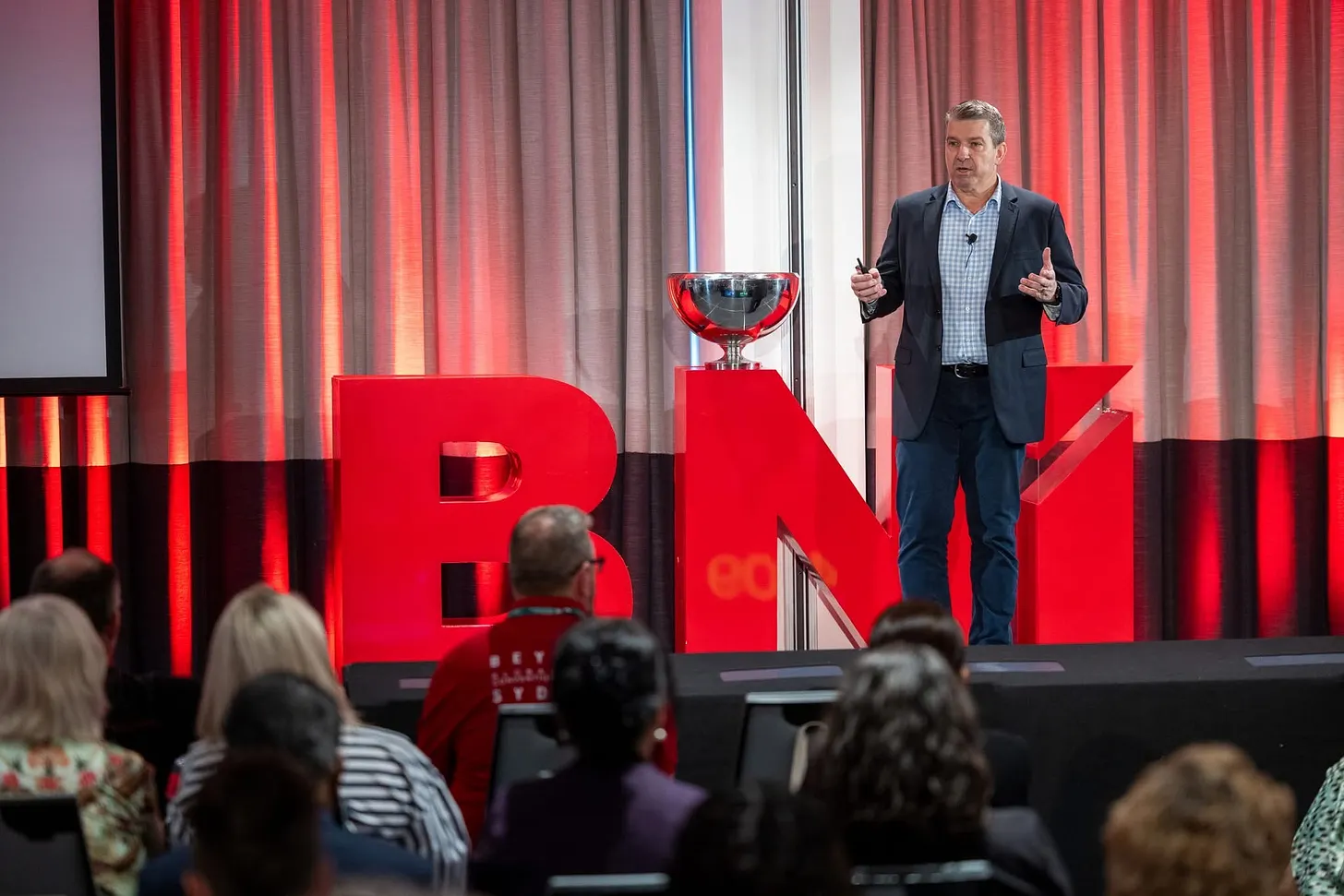
I am a business coach and the host of The BNI Effect podcast. I recently presented The Plus One Principle at the BNI Australia National Conference 2026.
